
Humanities
Curriculum Statement of Intent – Humanities
Geography
At Shirebrook Academy, as per the KS3 curriculum aims, students receive the first-class geography education that inspires in them a curiosity and fascination about the world and its people, that will remain with them for the rest of their lives.
Our Geography curriculum develops responsible informed global citizens who are knowledgeable about people, places, resources, natural and human environments and who have a detailed understanding about the interactions between these concepts. Indeed, as Barack Obama once stated, “the study of geography is about more than just memorizing places on a map. It's about understanding the complexity of our world, appreciating the diversity of cultures that exists across continents. And in the end, it's about using all that knowledge to help bridge divides and bring people together”.
In Y8 and Y9, we take an interleaved approach, studying a range of human and physical geography topics alongside key geographical skills such as ordnance survey maps and grid references. In Y8, students will learn about physical Geography of the UK through a study of rivers, physical world Geography of tectonics, ecosystems and biomes, as well as human Geography that assesses economic change in the UK.
A depth study of our threatened planet, assesses the skills, knowledge and understanding of the whole of Y8 at the year’s end. In Y9, students will learn about physical Geography of the UK through a study of coasts, physical world Geography of climate change and tropical rainforests, as well as how humans use resources and globalisation and development. A depth study of China as a global superpower, assesses the skills, knowledge and understanding of the whole of Y9 at the year’s end.
At KS4, we follow the AQA specification, studying four main units; Living with the physical environment, Challenges in the human environment, Geographical applications and Geographical skills. Within these units, students will learn about a range of Geographical issues such as natural hazards, tectonic hazards, weather hazards and climate change, landscapes in the UK, urban issues and challenges, the changing economic world and resources.
History
The History Curriculum at Shirebrook Academy aims to inspire a generation of young people who are curious and passionate about the past, and develops their ability to become active citizens in the future. Our curriculum will help students to make sense of the rapidly changing world around them, and to understand the foundations upon which their own lives and the lives of their ancestors were built.
In addition to teaching students a broad, challenging and exciting range of historical topics, our curriculum will also equip our young historians with the necessary skills to form their own enquiries and to fully develop their ability to investigate the past. We have worked hard to develop a spiral curriculum which revisits each of the fundamental historical skills as students progress through KS3 and KS4. This means skills are revisited, built upon and consolidated to create proficient historians who can master all of our curriculum goals and succeed in history beyond their time at Shirebrook Academy.
Good historians form their own enquiries, and are not afraid challenge the perceptions of others, and as a result our curriculum is enquiry-led. Each unit of study is broken down into a number of thought-provoking, incisive enquiry questions that encourage students to develop their own evidence based interpretations of the past.
A fundamental and crucial aim of the Shirebrook Academy History curriculum is to challenge and reexamine traditional narratives, and to give students the opportunity to learn about the histories of people beyond Britain and the western world. We want our students to critically evaluate the eurocentric view of history, and to explore the history of the wider world. It is our firm belief that history is a tool to promote equality, democracy, social justice, tolerance and to celebrate the rich and diverse tapestry of our shared history.
In the first half of Y7, students will undertake a broad and engaging study of British History from the Iron Age to the Middle Ages (c100BC-c1500AD). We will discover the seminal events that shattered and shaped these islands, and examine the countless cultural influences that have been left behind by the settlers and invaders who came here. Students will gain an understanding of medieval life, and understand the opportunities and challenges faced by those who experienced it. In the second half of Y7, we broaden our scope and examine the monumental moments and civilisations that defined the wider medieval world beyond the shores of Britain.
In Y8, students will pick up where they left off in terms of chronology and begin their study of Early Modern England (c1500-c1700). Students will use all of the skills they developed in Y7 to start dissecting this turbulent and gruesome period of history, and to discover why Britain found itself being torn apart by religious and political turmoil. They will also study the seismic changes brought about during the Industrial Revolution (1750-1900), many of which happened in the towns and coal fields that surround their classroom and are still evident today. In addition to these enquiries, students will examine the controversial legacy of the British Empire. Through studies of America, Africa and India students will form their own interpretations of the empire; establishing a firm foundation for their study of 20th century History in Y9. Y9 History focusses solely on the 20th century – the period that arguably shaped our modern world more than any other. Students will build on 2 years of study to analyse the state of the world at the turn of the century, and the events and ideologies that triggered a series of events culminating two global conflicts, nuclear war and a ‘cold war’ which still shapes international politics today. Students will also learn about the social movements that shaped this great century, such as the campaigns for women’s suffrage, the civil rights movement and the development of a National Health Service. Ultimately, students will finish their three-year chronological journey at the end of Y9 by examining the parallels between today’s society and the many historical worlds they have will have travelled through in their study of the past since the start of Y7. By this point, students will have secured their understanding of the past, and the skills necessary to evaluate it.
At KS4, we follow the Edexcel (9-1) specification. This involves the study of Anglo-Saxon and Norman England (1060-87), Crime and Punishment through Time (1000-Present), The American West (1835- 1895) and Weimar & Nazi Germany (1918-39). These units offer a combination of breadth and depth studies. As of September 2023, we have taken the exciting decision to replace the Crime & Punishment element with a study of ‘Migration to Britain’. This is in line with our commitment to providing students with a diverse study of History, and the greatest possible understanding of the world around them.
Philosophy and Ethics
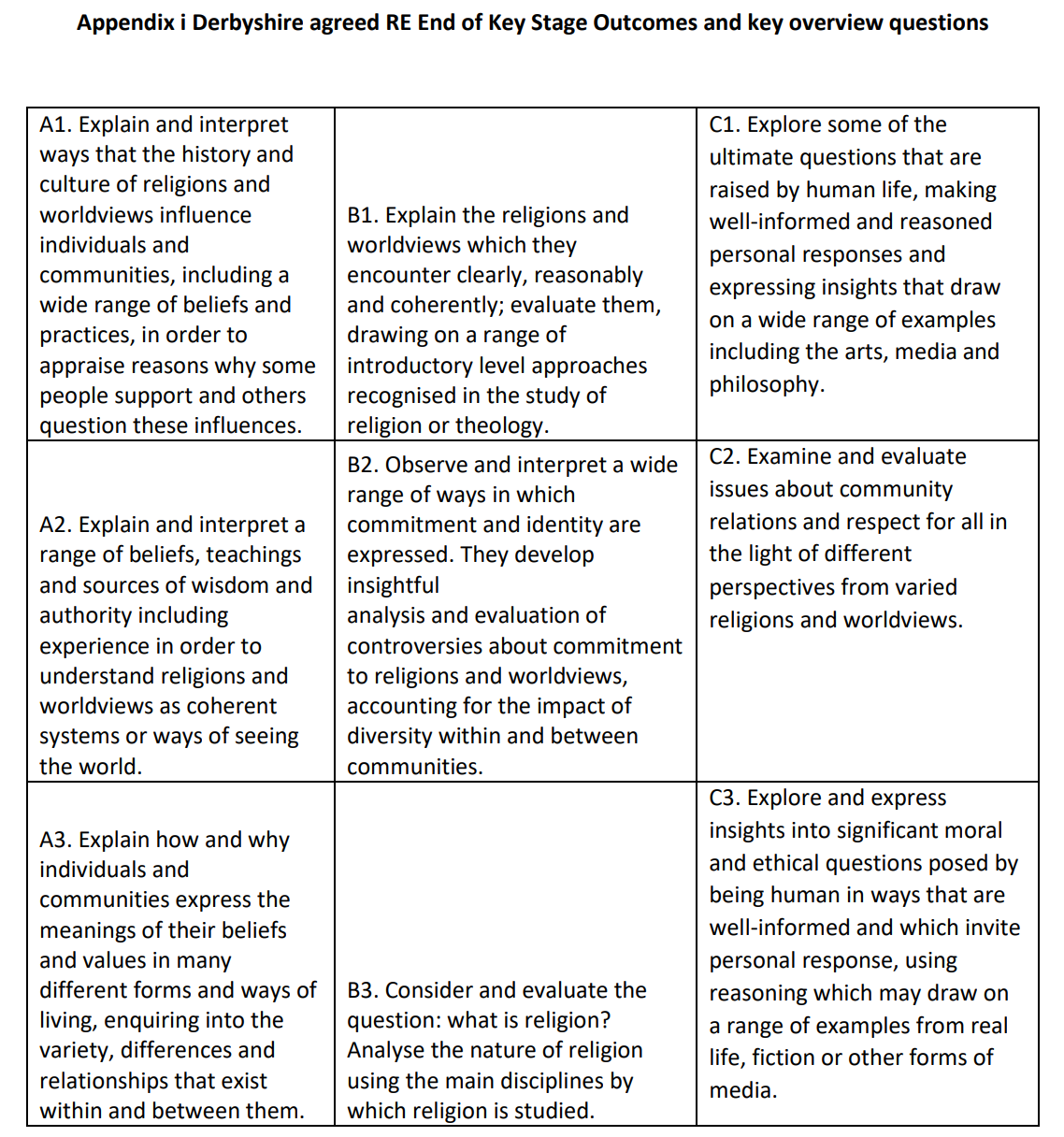
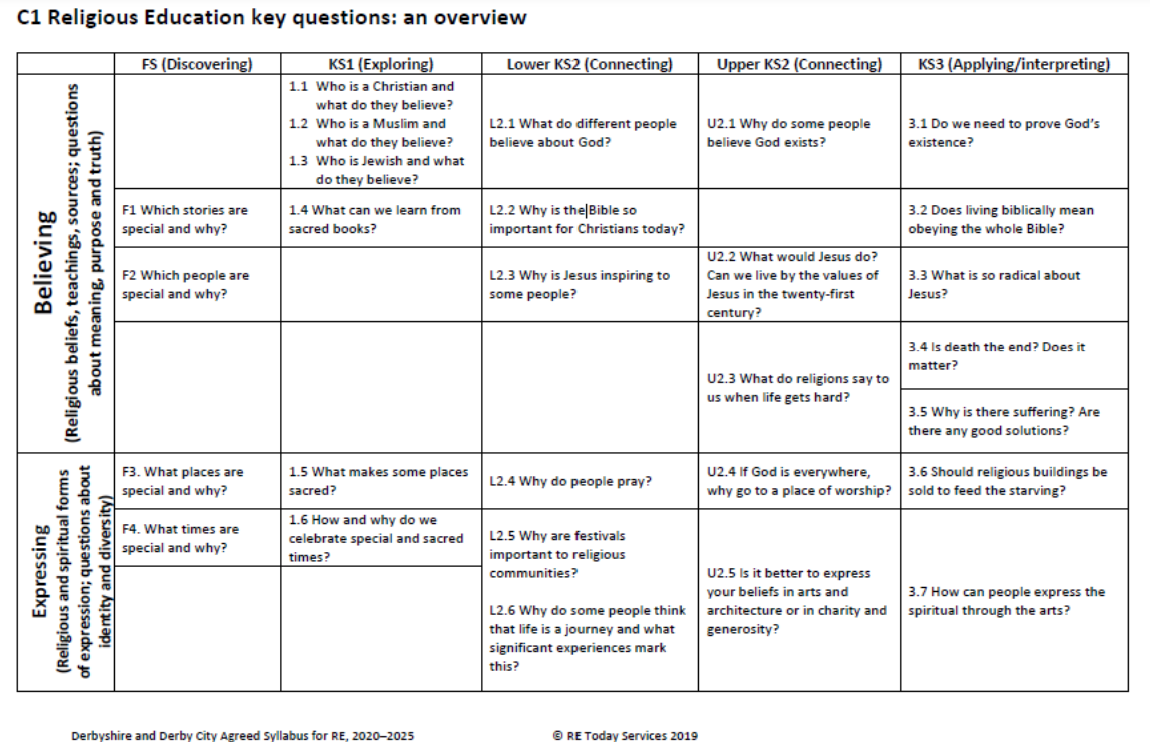
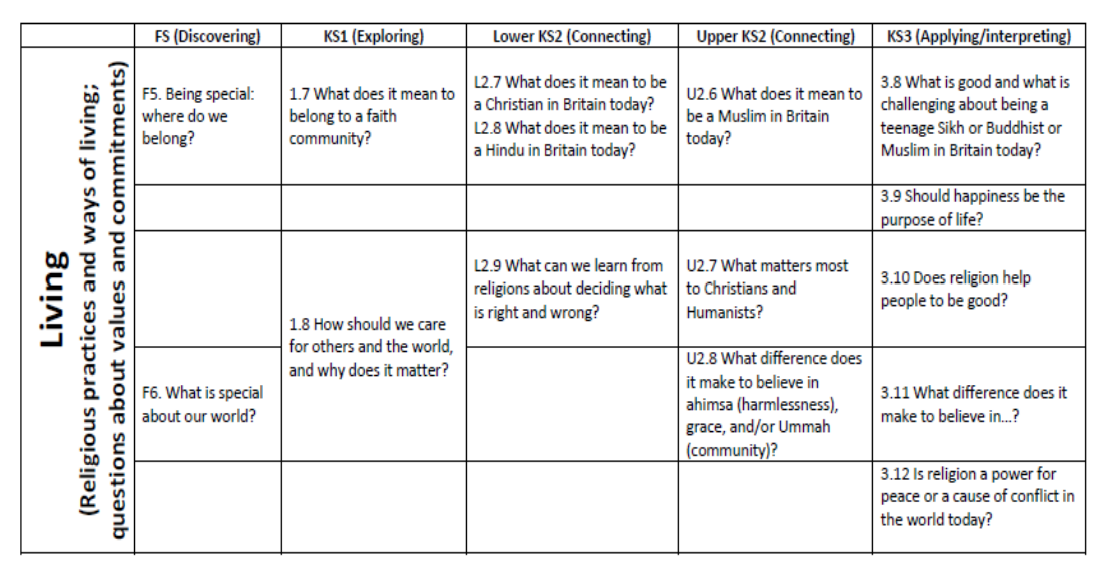
Religious Education at Shirebrook focusses on developing pupils' knowledge and understanding of a wide range of diverse beliefs, practices and non-religious views. Religious Education follows the Derbyshire Agreed Syllabus. The RE curriculum goes over and beyond the agreed syllabus by using it as a foundation rather than a limit. Students will learn about the six major world religions whilst also exploring key philosophical ideas (humanism, atheism) and ethical issues of debate. We set high aspirations for our students, empowering them to exceed expectations and realise their fullest potential.
At Shirebrook, Religious Education is committed to promoting the core values of tolerance and respect. The subject plays a vital role in fostering understanding, encouraging mutual respect, and supporting informed, respectful dialogue. At the heart of the curriculum is the intention to allow students to be able to develop their own opinions whilst also considering what others believe. Everything we teach is encapsulated by the phrase ‘knowing me, understanding’. RE lessons are designed to equip pupils with the knowledge and skills needed to engage thoughtfully with difference, challenge stereotypes and respond critically to misinformation, prejudice and extremism. Through the comprehensive study of the six major world religions at Year 7 students develop an in-depth understanding about diverse beliefs and practices. Building on the foundations established in Year 7, students will further develop their knowledge in Years 8 and 9, where they will make increasingly sophisticated links between beliefs, practices and religious viewpoints through the discussion of contemporary issues such as: How is religion presented in the media? Is there a God? Does life after death exist? How do we decide what is right and wrong? Has science in the 21st Century undermined the value of human life?
The study of Religious Education does not conclude at Key Stage 3; students may progress to GCSE Religious Studies. At Shirebrook we deliver the AQA syllabus Religious Studies. Students will study: Christianity and Islam, alongside the themes of Religion and Life, Religion, Peace and Conflict, Religion, Crime and Punishment, and Relationships and Families. The study of AQA Religious Studies at GCSE builds upon the knowledge, skills and understanding developed throughout Key Stage 3 and enables pupils to engage in a more rigorous and in-depth exploration of religion, philosophy and ethics. The course is designed to develop secure substantive knowledge of the beliefs, teachings and practices of selected religions, alongside a critical understanding of contemporary moral and social issues.
Religious Education at our school is inclusive and accessible to all students, regardless of their background, belief, or prior experience. The curriculum celebrates diversity and encourages learners to explore a wide range of religious and non-religious worldviews with openness, curiosity, and respect. By engaging with differing perspectives, students develop empathy, cultural awareness, and the ability to appreciate the richness of human experience. RE provides a safe and supportive environment where all pupils can express their own ideas, reflect on their values, and participate in respectful dialogue, ensuring that every learner feels valued and empowered to contribute meaningfully to their learning community
Through high quality teaching and assessment in RE we aim to provide students with a wide range of transferable skills that support both their academic and personal development. Pupils will develop a strong command of subject-specific vocabulary and a deep knowledge of religious beliefs, teachings, and practices, alongside an understanding of how these beliefs shape the lives of individuals and communities. Through engagement with sources of wisdom and authority, students learn to analyse and evaluate information critically, considering differing perspectives and forming reasoned judgements. RE also cultivates debating and discussion skills, encouraging students to articulate ideas clearly, listen respectfully, and construct balanced arguments. In addition, the study of Religious Education strengthens literacy skills, including reading, writing, and comprehension, as students communicate complex ideas with precision and clarity. Together, these skills prepare learners to think critically, engage thoughtfully with the world around them, and apply their learning across other subjects and real-life contexts.
Appendix